AI coding agents - tools like Claude Code, OpenAI Codex, Aider, and Gemini CLI - have become genuinely good at doing real work in a terminal. You give one a task, and it reads your code, runs commands, edits files, and checks its own work. The catch is that each agent runs in its own window and works on one thing at a time. The moment you want to run more than one, you are juggling terminals.
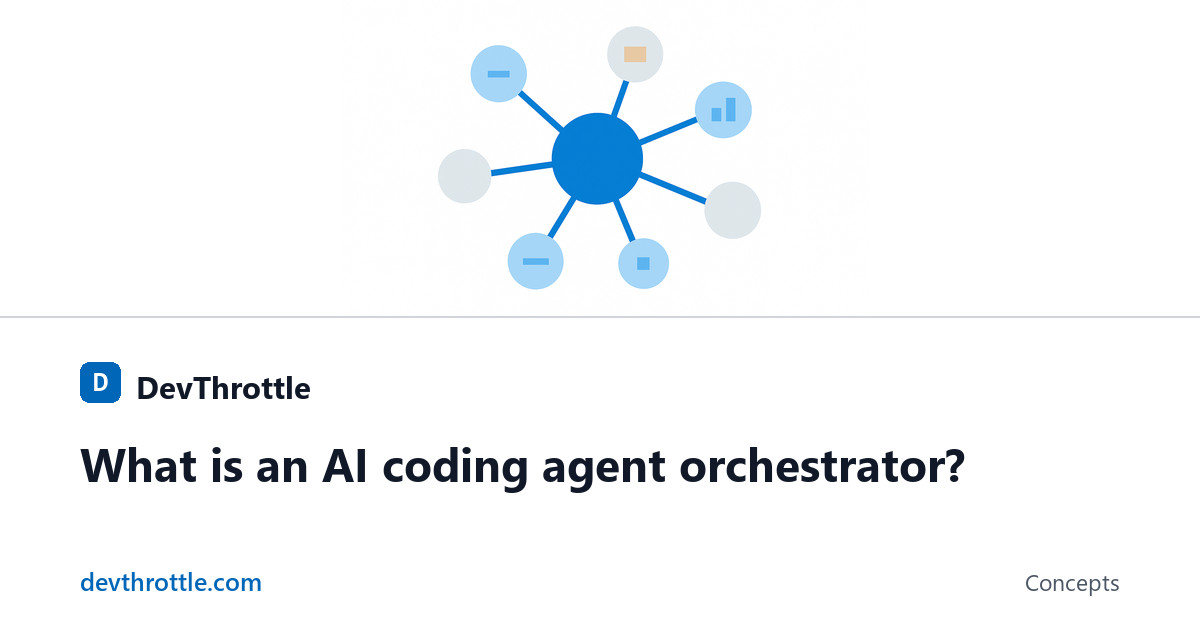
An AI coding agent orchestrator is the layer that sits above those agents and coordinates them. It does not write code itself. Instead, it runs many agents at once, shows you the state of each one in a single view, and tells you the instant one needs your attention.
What an orchestrator actually does
Three jobs separate an orchestrator from a row of terminal tabs:
- One place for every agent. Instead of hunting through windows, you see each agent and its status - working, finished, or waiting on you - in one place.
- Attention routing. Agents stop and ask questions. An orchestrator flags the ones that are blocked so you answer them in seconds instead of discovering forty minutes later that an agent has been idle.
- Reach from anywhere. A good orchestrator keeps agents running in the background and lets you check in from a browser or a phone, so stepping away from your desk does not stop the work.
Why this is becoming necessary
A single capable agent can keep one developer busy. But the productivity unlock is running several in parallel - one fixing a bug, one writing tests, one refactoring - because the bottleneck stops being the model and starts being you. The constraint becomes how many agents a person can supervise at once. That is the problem an orchestrator solves: it raises the number of agents you can keep moving without dropping any of them.
Orchestrator vs. agent vs. IDE plugin
It helps to be precise. An agent is the thing that does the work. An IDE plugin embeds one agent in your editor. An orchestrator is provider-neutral: it runs whichever agents you already pay for, across different tools, and manages them as a fleet. You keep your existing subscriptions; the orchestrator just makes the fleet legible.
Where DevThrottle fits
DevThrottle is an open source orchestrator for command-line coding agents. It puts every agent you run in one place (Director), keeps them alive in the background (Gateway), and lets you answer them from any browser (Cockpit) or your phone - by voice if you want. Your agents run on your own machine: the app installs there, and the code work happens there.
If you are still running a single agent at a time, you probably do not need an orchestrator yet. The moment you find yourself with three terminals open and no idea which one stalled, that is the signal.
Run your agents from one control room
DevThrottle orchestrates command-line coding agents across your machines.
Create free account