Running AI coding agents, in practice.
Plain-English guides and explainers on orchestrating command-line coding agents - the concepts, the workflows, and how the benchmarks actually work.
 Concepts
The agent that wrote the code should not be the one that says it works
The limit on how many coding agents you can run is not tooling, it is trust - and trust comes from verification you did not have to do yourself. Why the reviewer should be a different agent to the author, what a QA report on a pull request should contain, and how a review seat runs on DevThrottle.
 Guides
How to let a coding agent use a website you are signed in to
Pointing an agent at your everyday browser no longer works, and you would not want it to. A separate browser profile you sign in by hand, to exactly the accounts an agent may reach, the one block that lets the agent drive it, and why a signed-in profile is a credential.
 Guides
What did your agents do this week?
Agents work while you are elsewhere, so most of the week happened out of sight. A five-minute Friday review in History: what each entry tells you, why the needed-you count is the number to read, and how to turn the worst one into a single better instruction.
 Concepts
Eight agents on three machines, and one picture of all of them
Past a handful of sessions the question stops being about any one agent and becomes what the whole fleet is doing. The Fleet Map: the one number in its header worth reading, eight ways to group the same sessions, and why a machine that goes quiet dims in place instead of vanishing.
 Guides
How to show a coding agent a screenshot on Windows
An agent reads a picture as a file on the machine it runs on, so every route is the same two steps: get the file there and put its path in the prompt. Dragging at your desk, pasting in a browser, a photo from your phone - and where paste does not work.
 Guides
Do not interrupt an agent that is going well. Queue the next thing.
You think of the next instruction while the agent is mid-task. Interrupting costs it its place; waiting means being there when it stops. Queue it instead - and why the queue never sends anything by itself.
 Concepts
Stop retyping the same rules into every agent session
Branch first, tests before done, tell me once at the end - typed into a prompt, it lasts one session. A workflow is written guidance your whole fleet shares: how sessions find it, how a change reaches every machine without touching work in flight, and how an improvement sticks.
 Guides
The agent is confidently doing the wrong thing. Now what?
Killing the session and starting again is the expensive reflex, and almost never the right one. The four buttons above the message box in the order they cost you something, how to tell a wrong step from a wrong goal, and why a full context window looks exactly like an agent going astray.
 Guides
What you actually need before your first agent session
An orchestrator runs the coding agents you already have, which means one step on day one happens somewhere else. The three things to have ready - an agent installed on that machine, a repository to point it at, and a decision about approval prompts - and what the screen does when one is missing.
 Concepts
There is no port to open, and that is the point
Answering an agent on your desktop from a laptop somewhere else usually means port forwarding and a small permanent worry. Every machine dials out instead, nothing listens, and the Gateway cannot contact your machines at all - with the one listener and the one exception stated plainly.
 Concepts
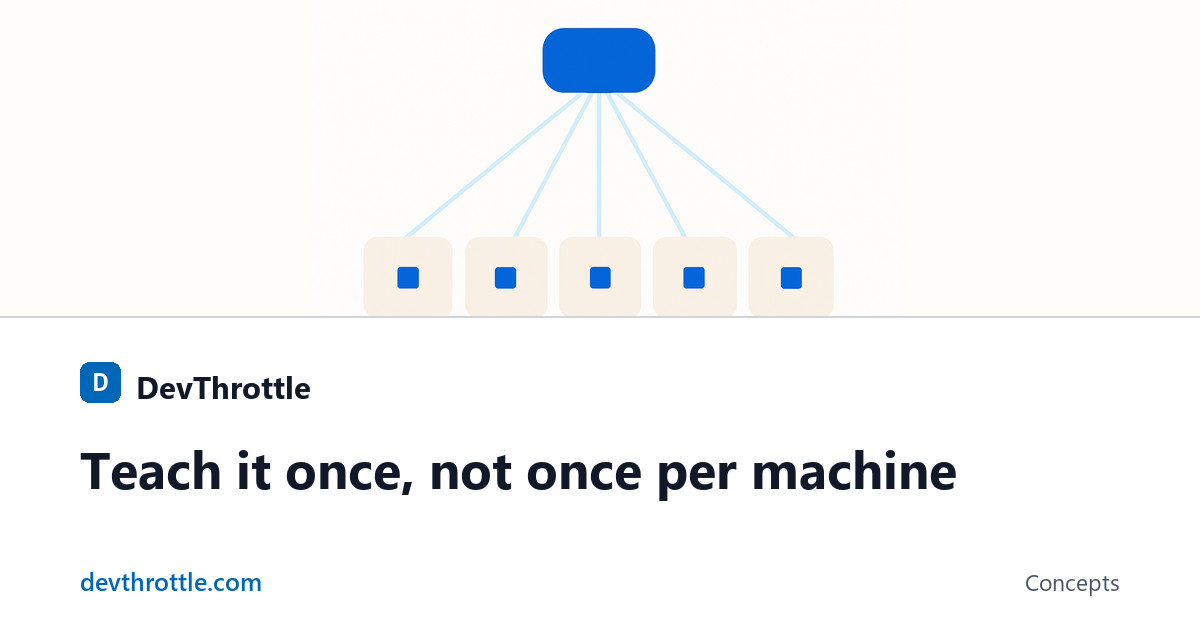
Teach it once, not once per machine
Instructions copied onto every machine mean a release to change a word, and a withdrawn instruction that keeps working from a copy nobody remembered. A skill is a folder held centrally, in one open format every first-class agent reads, where publishing is the whole deployment.
 Guides
The work that should happen whether you are at the keyboard or not
Some jobs are only worth doing if nobody has to remember them. The built-in scheduler starts an agent session on a cron expression or a single timestamp - and the four behaviours to know before you rely on one, including what happens when the machine was off.
 Guides
Your agent needs the password. It does not need to see it.
Typed into a session it lands in the transcript; put in a file it ends up committed. The third option: store it once by hand, and let the session ask the tool to do the thing the password is for. What that protects against, and - stated plainly - what it does not.
 Guides
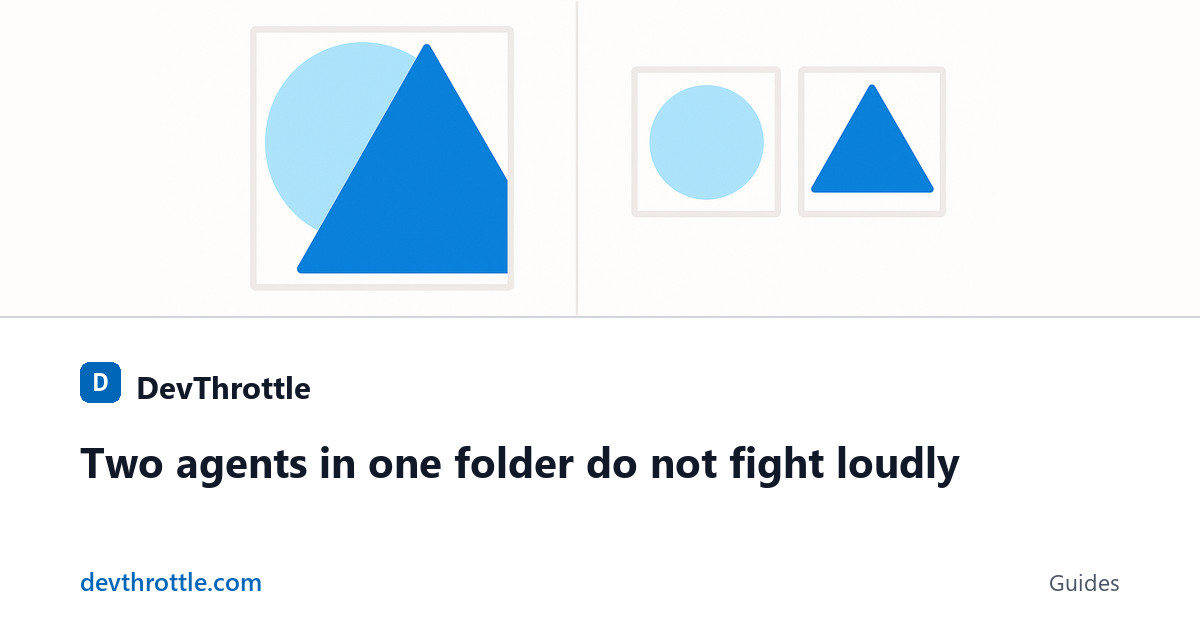
Two agents in one folder do not fight loudly
Point two coding agents at the same directory and they will not error - they will quietly blend two intentions into one diff. Why a git worktree per session is the fix, what that looks like on Windows, and where isolation stops being enough.
 Concepts
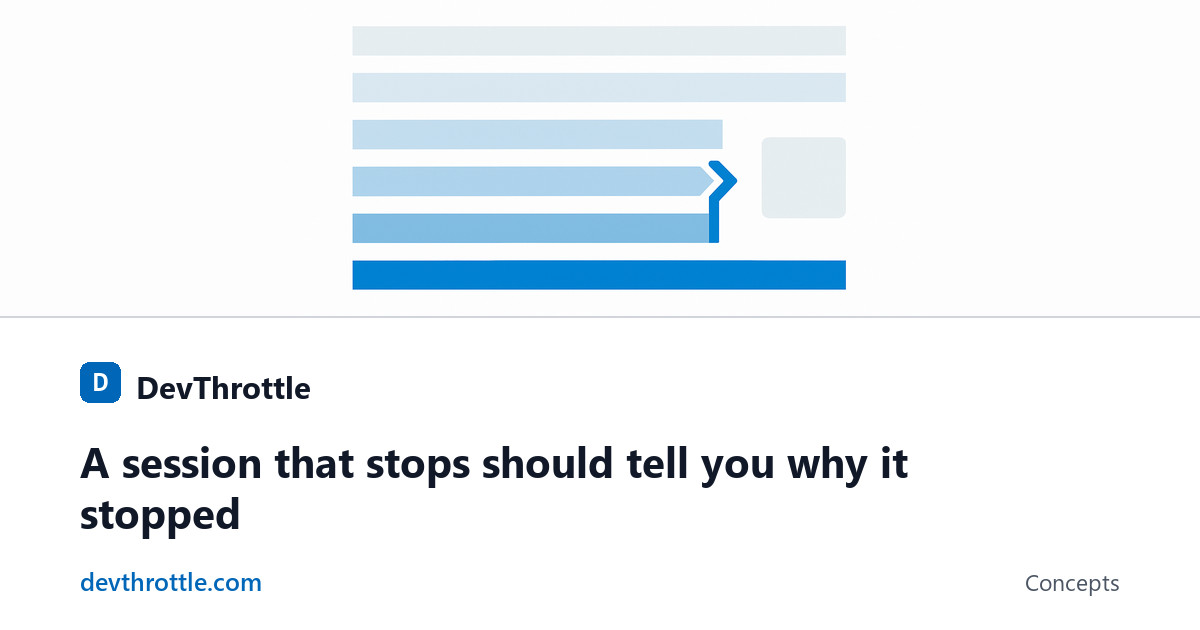
A session that stops should tell you why it stopped
A coding agent waiting on a question and one that died half an hour ago used to look identical: a quiet row. Why the gap between a failure and noticing it is the real cost of running a fleet, and what a session row owes its supervisor.
 Concepts
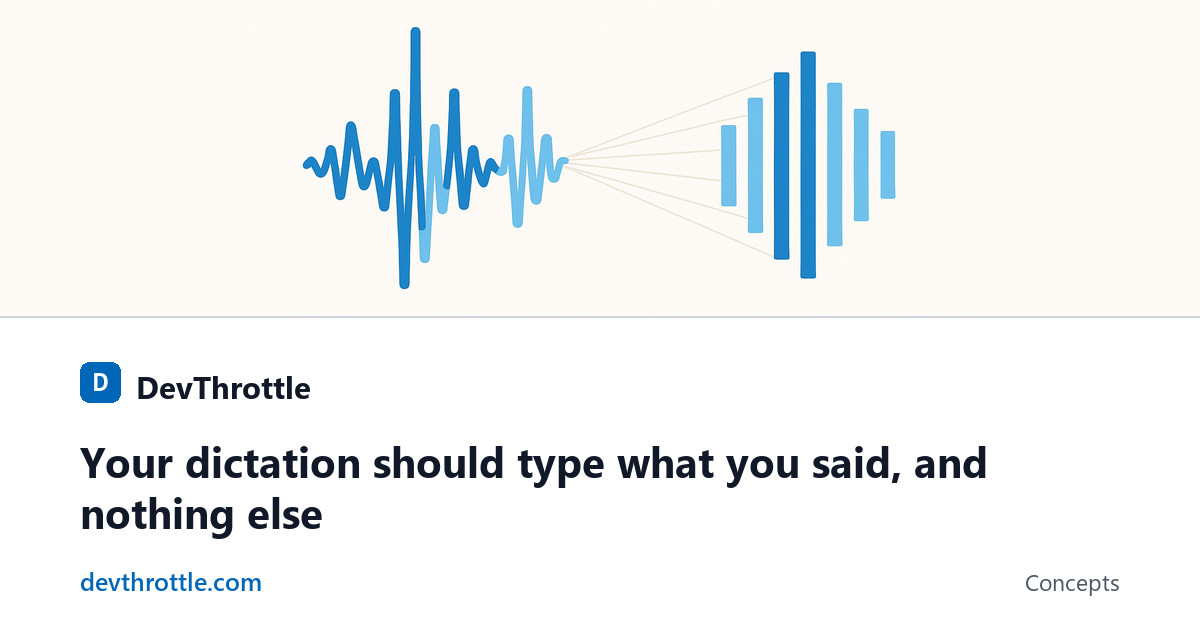
Your dictation should type what you said, and nothing else
A mistyped word in a text message gets read past. A mistyped word in a prompt makes an agent do the wrong thing competently for twenty minutes. The rule DevThrottle builds transcription to, what it forbids, and how the Gateway dictionary fixes your own vocabulary once.
 Guides
The thirty-second answer that saves two hours
An agent stops with a question. Answering takes thirty seconds at your desk and costs two hours if you are not at it. What the DevThrottle phone app shows, the one filter that can hide a waiting session, and why to set it up before you need it.
 Concepts
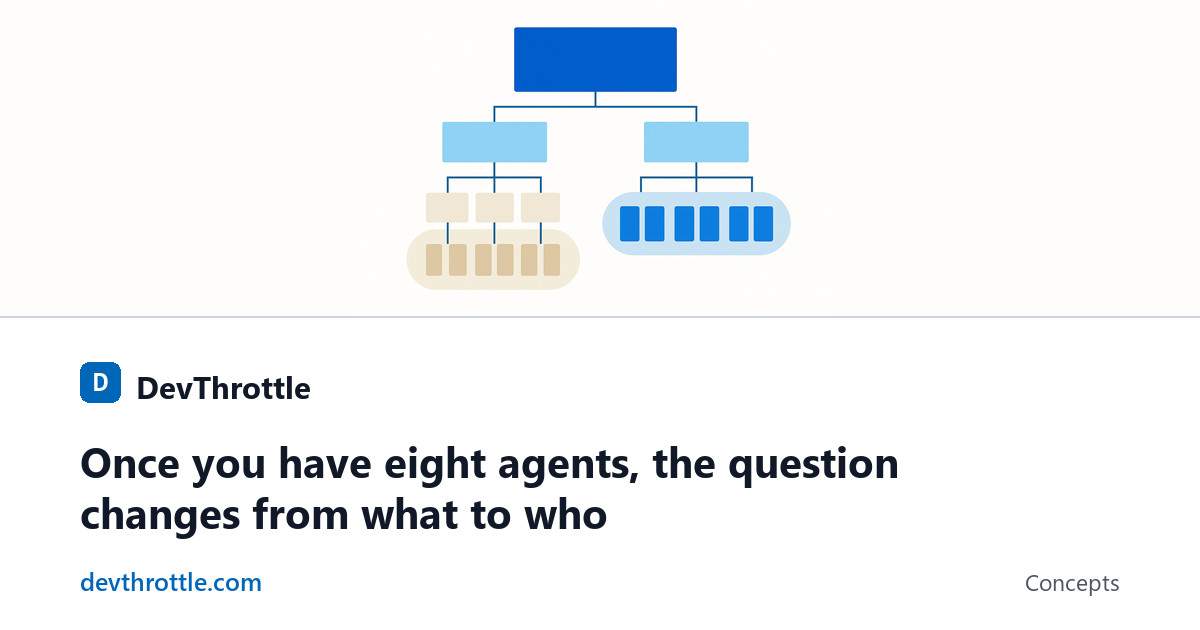
Once you have eight agents, the question changes from what to who
Two coding agents you can hold in your head; eight you cannot. Session roles - Standalone, Architect, Manager, Worker - and named missions let you read a busy fleet in one sweep, and they are what survives the weekend.
 Guides
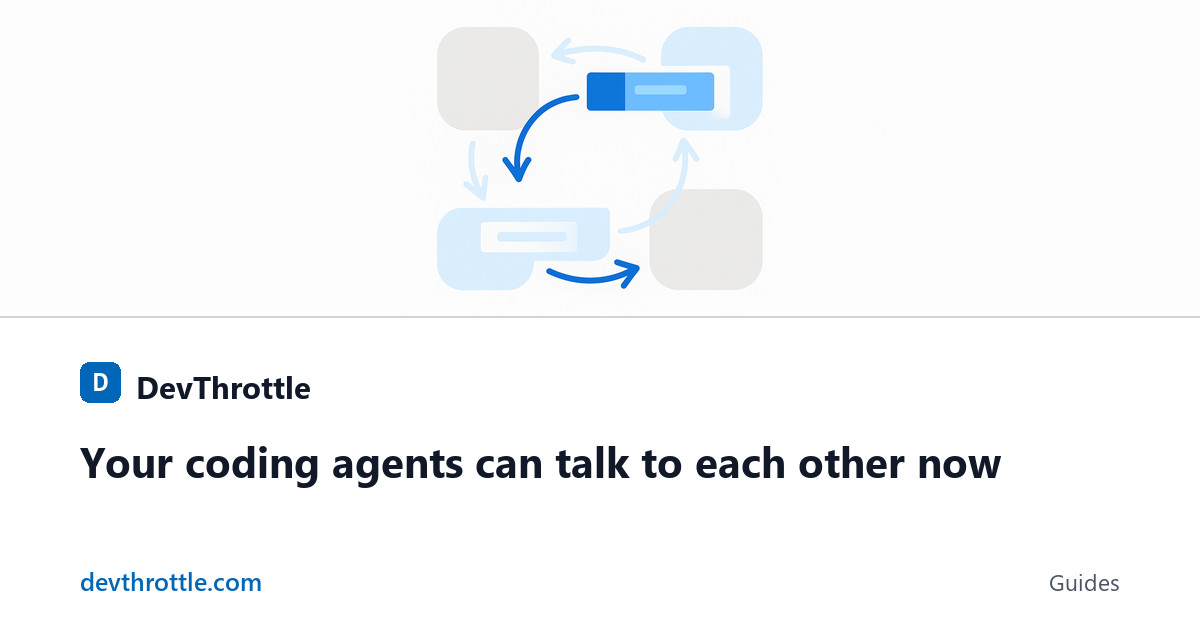
Your coding agents can talk to each other now
The usual way to run several coding agents is to be the wire between them. DevThrottle sessions can send messages, ask each other questions and wait for the answer, or start new sessions on any machine you have connected - with rails so a fleet cannot flood itself.
 Concepts
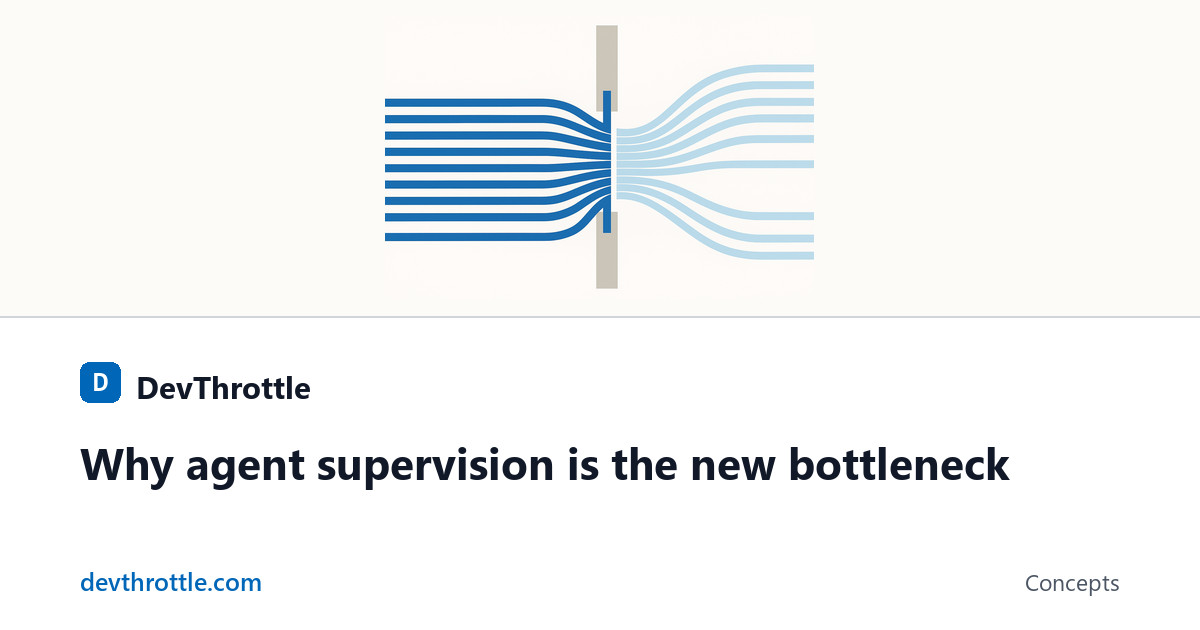
Why agent supervision is the new bottleneck
AI coding agents ended the era where typing speed limited software output. The new constraint is how many agents one person can supervise without dropping any. A founder with 25+ years shipping software on why the bottleneck moved from writing code to watching it get written.
 Guides
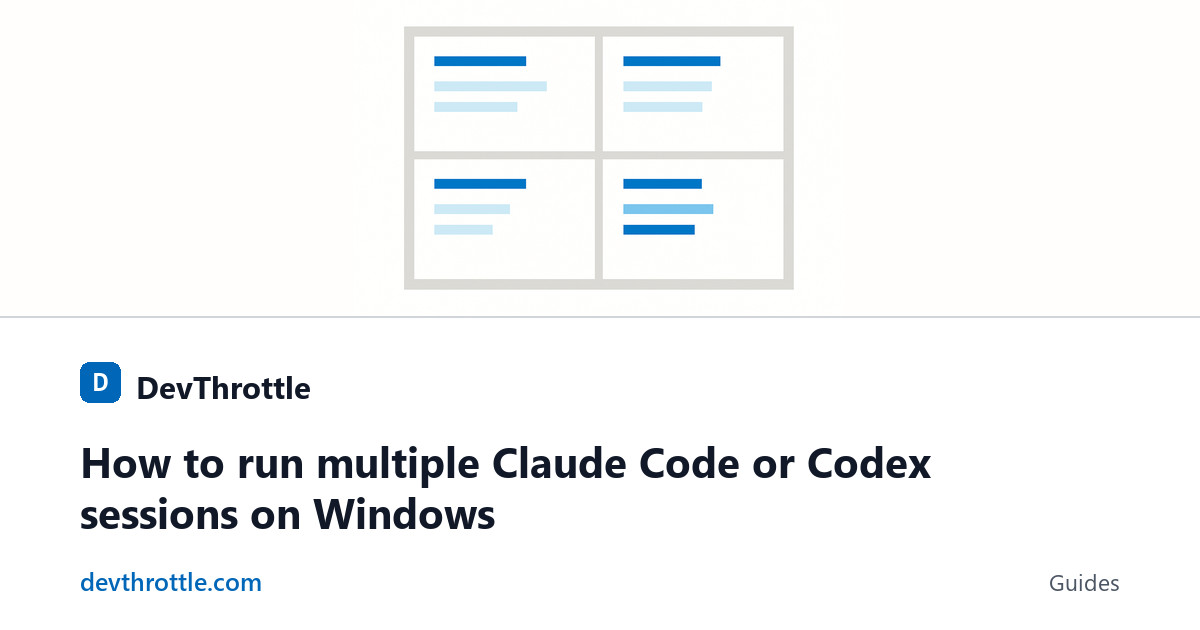
How to run multiple Claude Code or Codex sessions on Windows
A practical guide to running several Claude Code or Codex sessions at once on Windows: multiple terminals, git worktrees so sessions never collide, where the manual setup breaks down, and the purpose-built way to supervise a fleet.
 Concepts
DevThrottle doesn't change your CLI - it gets out of the way
Claude Code inside DevThrottle is Claude Code: same commands, same flags, same behavior, same output. DevThrottle is scaffolding around the coding-agent CLIs, not a wrapper over them - and preserving native CLI behavior is a deliberate product commitment.
 Concepts
Some agents you can manage by voice. Others need a whiteboard.
Running a fleet of coding agents feels like managing a team of developers - some you can brief by voice, others need a shared screen. Why the best agent workflow lets you switch between voice, full screen, and remote browser instead of forcing one mode.
 News
xAI's Grok Build is here - the easy way to actually try it
xAI's Grok Build is a new CLI coding agent: plan mode, subagents, native MCP, one-line Windows install. How to try it next to Claude Code with DevThrottle.
 Concepts
What is an AI coding agent orchestrator?
AI coding agents like Claude Code and Codex run one task at a time in a terminal. An orchestrator is the layer that runs many of them at once and tells you which one needs you. Here is what that means and why it matters.
 Guides
How to run multiple AI coding agents at once without losing track
Running three or four coding agents in parallel is the fastest way to ship - until you lose track of which one stalled or asked a question. A practical guide to running a fleet of agents and keeping them all moving.
 Benchmarks
Terminal-Bench, explained: how AI coding agents get scored
Terminal-Bench measures how well AI agents complete real command-line tasks - fixing builds, wrangling git, configuring servers. Here is how the benchmark works, how to read the leaderboard, and what the scores actually tell you.